Remembering Richard
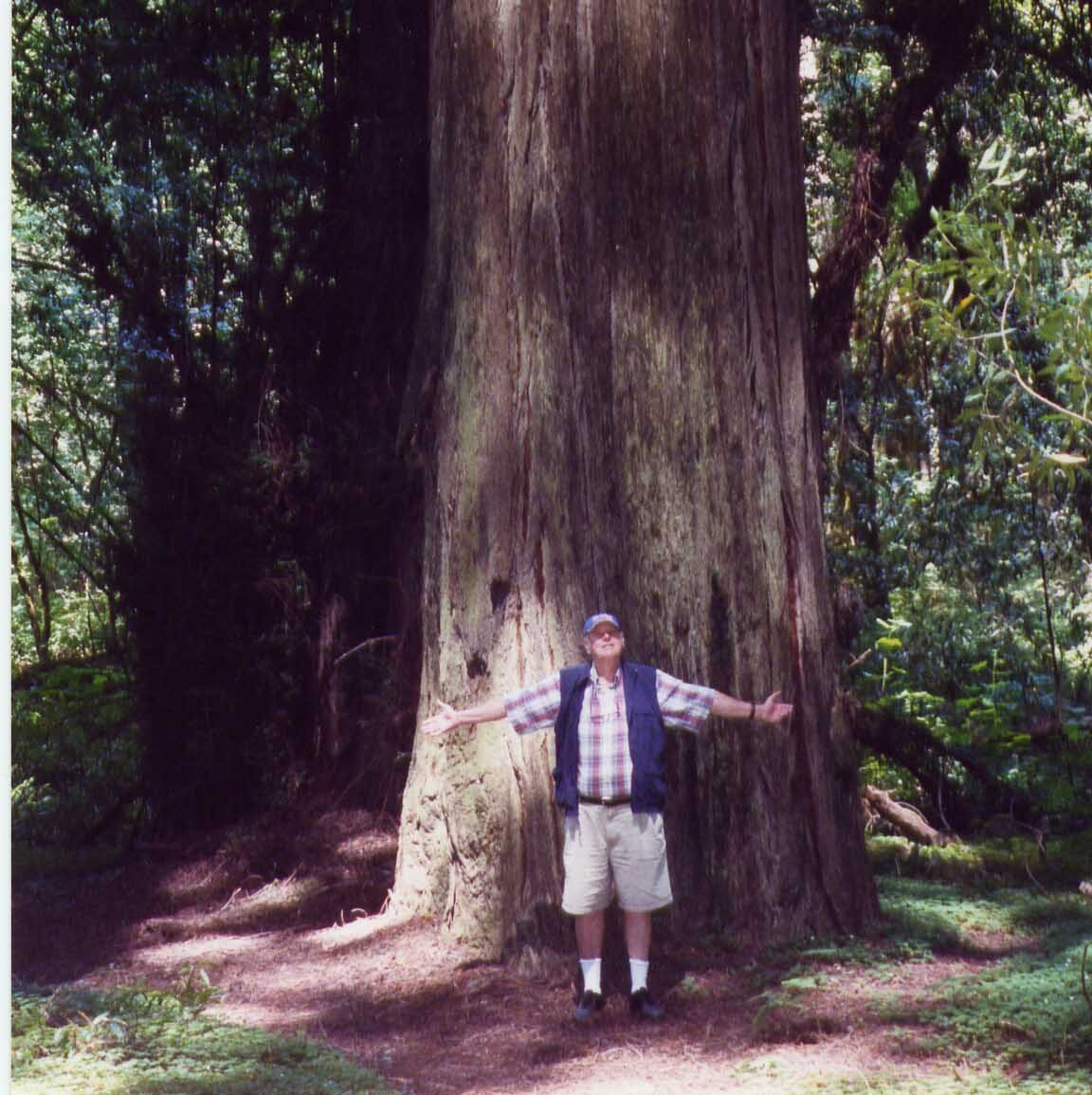
the only plant that could make him look small
The first thing you noticed about Dick Roeper was that there was a lot of him.
Six foot five – he was proud of his height until the very end – and somewhere north of 230 pounds for most of his life, Dick had a physical presence that filled a room before he’d said a word. The children who knew him as kids remember craning their necks up, and up, and up. The students who filed into his biology classes at Alma College remember a man who seemed to take up the entire front of the room — not because he demanded attention, but because he simply filled it.
The second thing you noticed, if you stuck around, was that he never really left once he arrived.
The Beginning
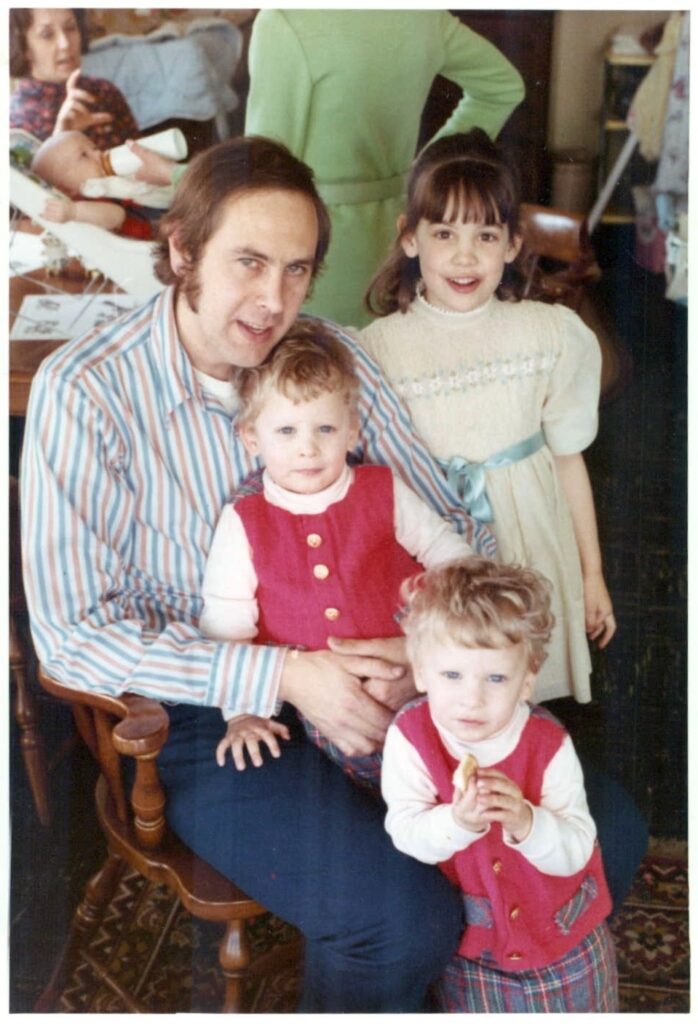
Richard Allen Roeper was born July 13, 1938, in Evanston, Illinois, where he first learned to endure the pain of being a Cubs fan. He earned his B.A. from Lawrence University in Wisconsin, his Master’s from Miami University in Ohio, and his Ph.D. in mycology from Oregon State University in 1972 — where, incidentally, he was already showing up for the things he believed in, including chaining himself to trees slated for logging in the forests of the Pacific Northwest. He was a graduate student with opinions and the willingness to act on them. That never changed.
He joined the biology faculty at Alma College in 1972, the same year he finished his doctorate. He would stay for nearly three decades.
The Professor
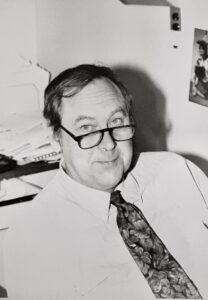
Dick’s office at Alma was legendary.
Students, colleagues, and the occasional brave administrator have described it in terms that range from “impressive” to “genuinely alarming.” Towers of paper. Stacks of research. Boxes of data. Books wedged in wherever books could be wedged. The filing system, if there was one, was known only to Dick — and even that is perhaps generous. What his students didn’t know was that his home office looked exactly the same, and was sometimes called “the hole.” The door was kept shut.
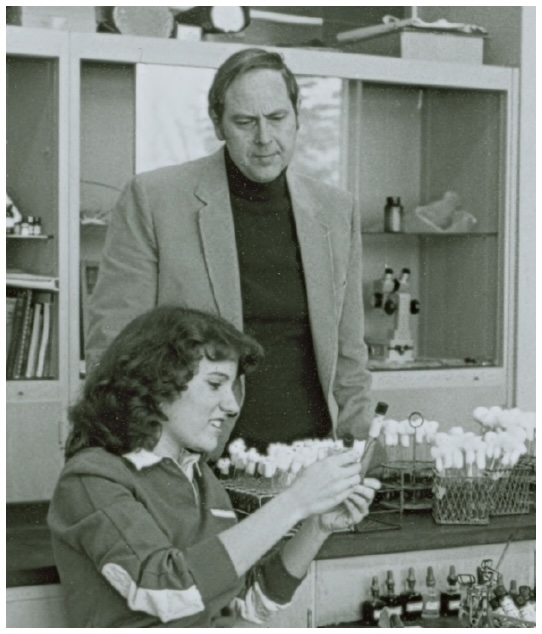
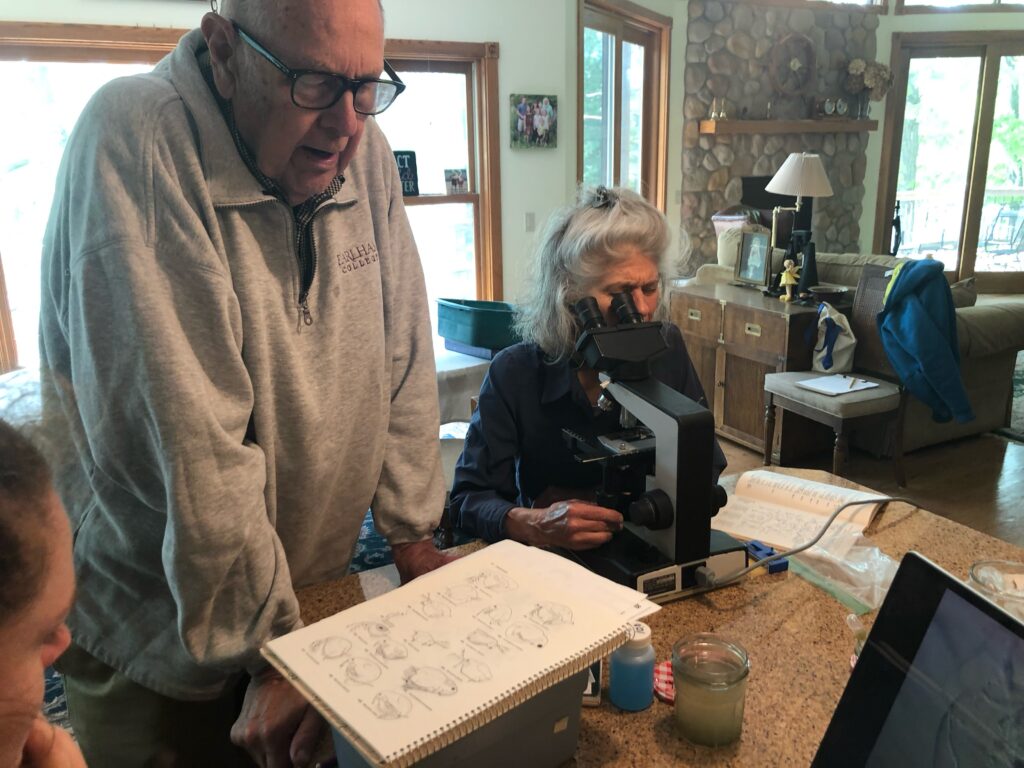
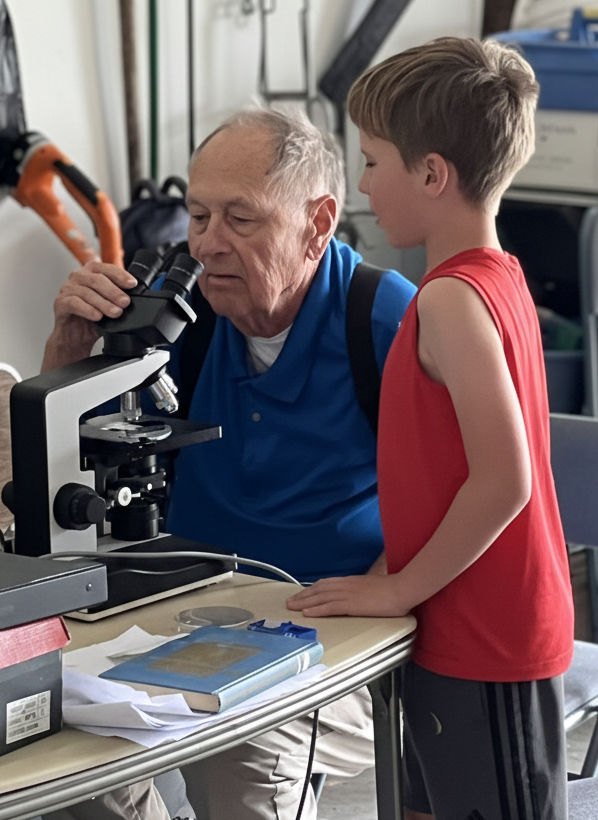
Inside that chaos was a scientist who cared, deeply and specifically, about the people sitting in front of him. He taught more than 4,000 students over his career. He won the Barlow Award for outstanding teaching. He chaired the biology department. He directed Alma’s Environmental Studies Program in the 1990s, pulling in colleagues from political science, communications, and geology to show students that the environment wasn’t one discipline’s problem — it was everyone’s.
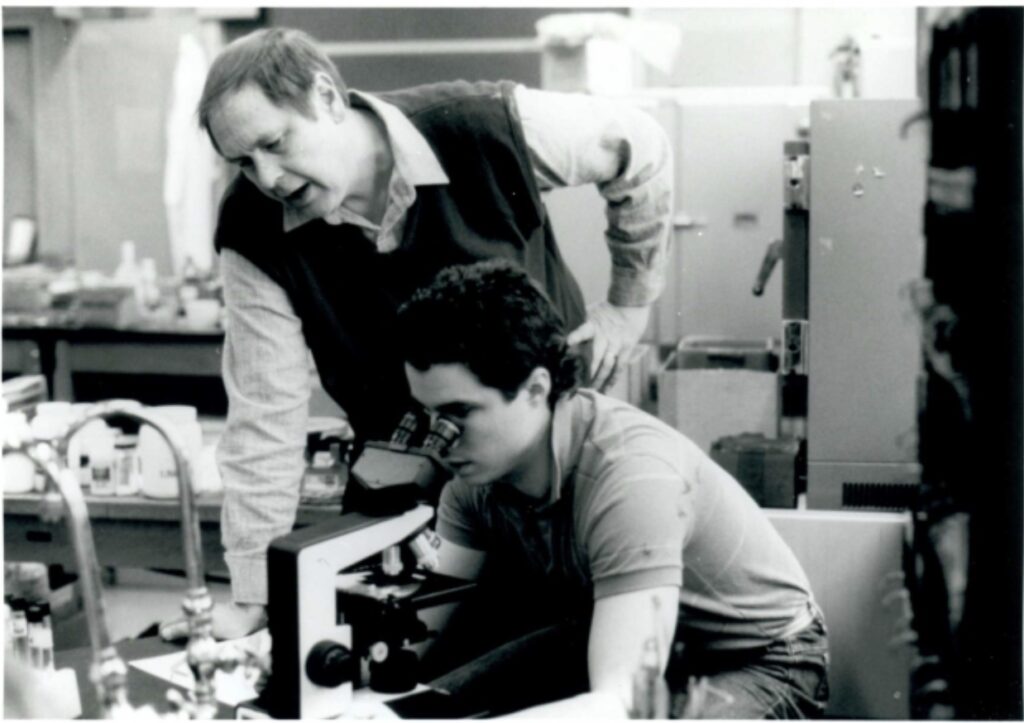
He encouraged students to “do science” — not just read about it, not just memorize it, but actually do it. He brought them out to Alma’s Ecological Station, the beloved “Bog,” to collect data on ambrosia beetles and their associated fungi. He directed independent studies. He helped students present their findings at professional organizations like the Michigan Academy and the Michigan Entomological Society, teaching them not just how to discover things but how to stand up and say what they’d found.
He particularly loved working with students who needed someone to believe in them. The ones who weren’t sure they belonged. The ones who needed someone to notice when they’d gone missing — and to show up at the dormitory and say: I see you, and you’re coming back to class.
The Man at Home
Away from campus, Dick had enthusiasms that were pursued with full commitment.
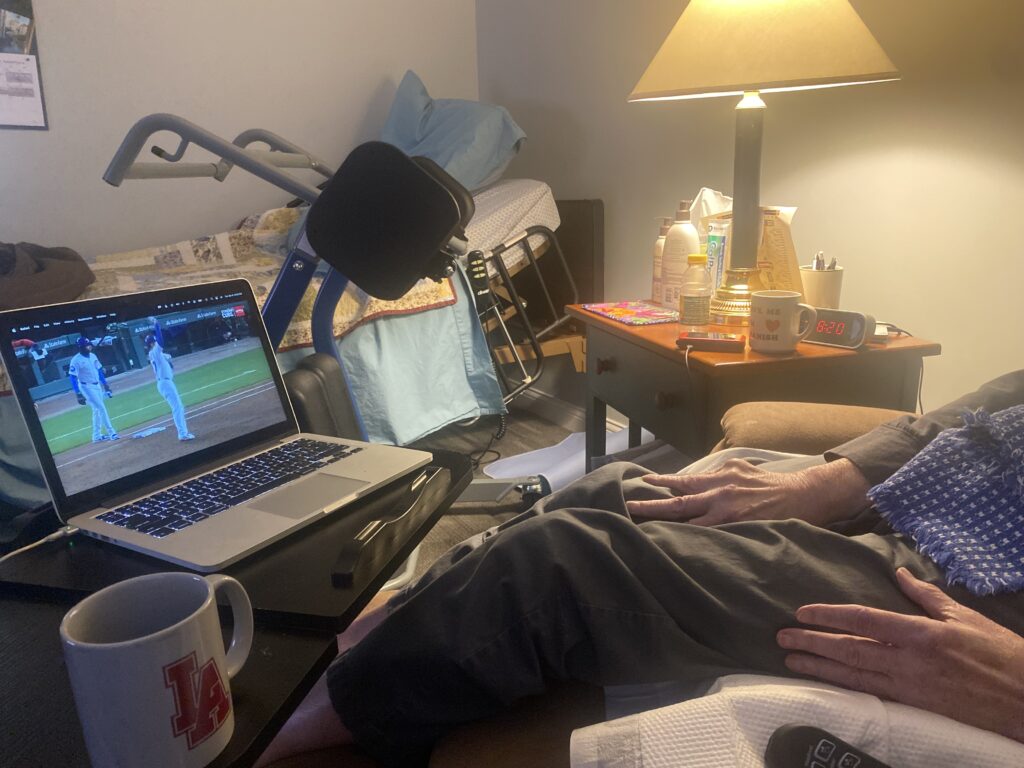
The Cubs, for one. He was a lifelong, devoted, long-suffering Chicago Cubs fan during the decades when being a Cubs fan was an act of spiritual endurance. Summer afternoons and evenings found him in the recliner in the family room, a big bowl of peanuts in his lap, shelling them by hand while the shells gradually migrated into the chair cushions and a ring around the chair. He yelled at the television. He yelled a lot. The family would close the door; Lauren would ask Karen if he was ok.
He lived to see them win the World Series in 2016, and his childhood friends lit up the phone lines: they had endured long enough to each see the dream come true.


He was also, it should be said, a world-class collector of things. Coins. Stamps. Academic journals. Research papers. His coin and stamp collections, accumulated quietly over decades, turned out to be worth thousands of dollars when his wife Karen finally sold them. He had a gift for patient accumulation — of knowledge, of specimens, of gummy candy, of things that caught his interest and wouldn’t let go.
Dick had a ferocious sweet tooth. Peach was the pinnacle: peach anything, really, including peach gummy rings, peach ice cream, saccharine peach Crystal Light, and peach shakes. He also persisted in eating caramel corn—by the bucket—in complete defiance of every dentist he ever had.
And the dogs: like everyone else, the dogs always did what Karen said, but it was Dick they followed around like shadows. The golden retrievers Amber, Max and Rudy, the mutt Scooter, and the beagle Cubbie knew exactly where to sit at dinnertime, which chair to look under for left-behind treats, and who was going to take them outside for a long ramble. They were his companions in the fields and gardens. Scooter learned to hunt bugs at the Bog. Amber used to sit with his snout under Dick’s arm at the dinner table every night. Dick would take Max and Cubbie to the soybean field every day; he kept wandering Cubbie tied to an old car battery. Rudy remains “Dick Roeper in dog form.”
The Gardens
When Dick and Karen moved to Richmond, Indiana — she to a new position at Earlham College, he newly retired after one final year at Alma — he encountered something he’d rarely had before: free time.
He filled it by creating a forest.
The property outside Richmond was four acres of former soybean field, flat and open, looking out over farmland. Dick got to work. He ordered National Forest Service saplings in bundles of 50 and 100. He planted them in rows and clusters across the field. To the untrained eye in those early years, it looked like someone had pushed a lot of dead sticks into the ground. Karen found this hilarious. But Dick knew what he was doing, because now, 20 years later, those sticks are a forest.
(The chaotic office came with him to Indiana. He had a whole separate garage built to house his boxes and papers and a barely-used boat which was dubbed the aquatic filing system given that it, too, was filled with papers.)
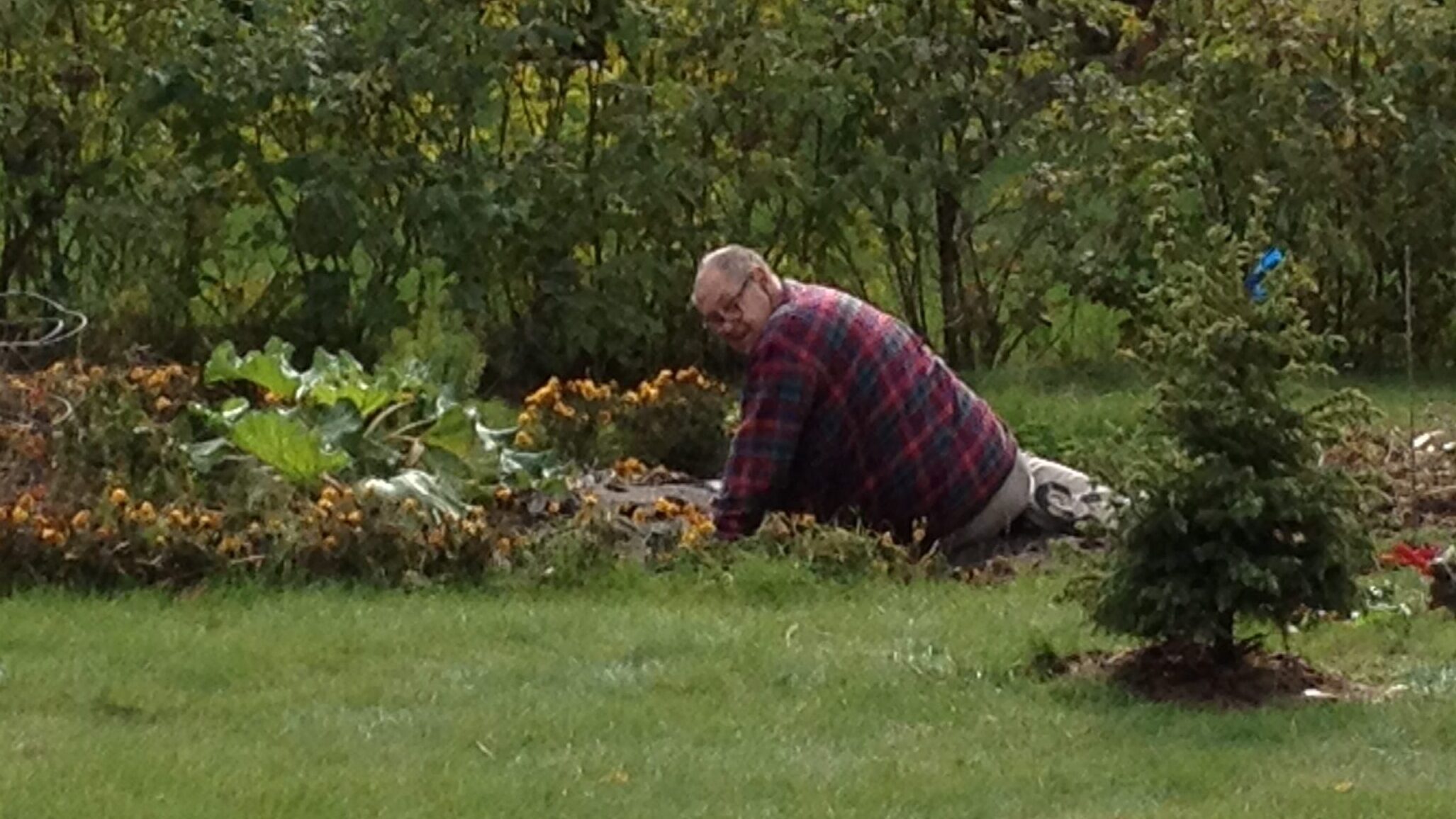
He also had what the family came to call the patented Dick Roeper horizontal gardening technique. This was not something he adopted in old age to spare his joints. This was simply how he gardened, always: lying on his side in the dirt.
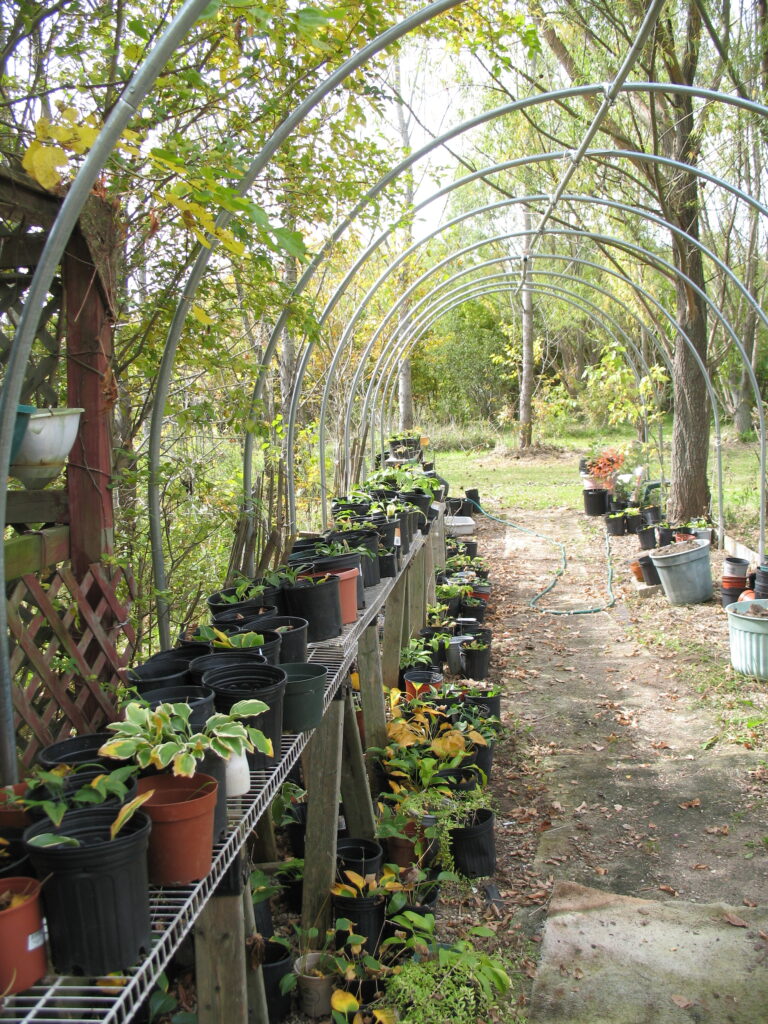
The hostas were a chapter unto themselves. His interest in them began in Alma, where he cultivated close to 300 species — a garden on the vacant lot next to the house that grew so lush and dense it looked subtropical. He earned Master Gardener certification through the University of Michigan. He attended Great Lakes Hosta College gatherings in Indiana and Ohio. In Richmond, he built a shade house for his collection.
And he gave them away, constantly and freely, to anyone who expressed even passing interest. Friends, neighbors, students, acquaintances — if you admired a hosta, you were going home with a hosta. Since his passing, total strangers have reached out to Karen to let her know that they have his plants growing in their gardens. His hostas are thriving in yards across Michigan, Indiana, and Ohio, tended by people who remember the tall man who handed them a clump of roots and told them what to do with it.
The Activist
Long before “environmentalist” was a common self-description, Dick was one.
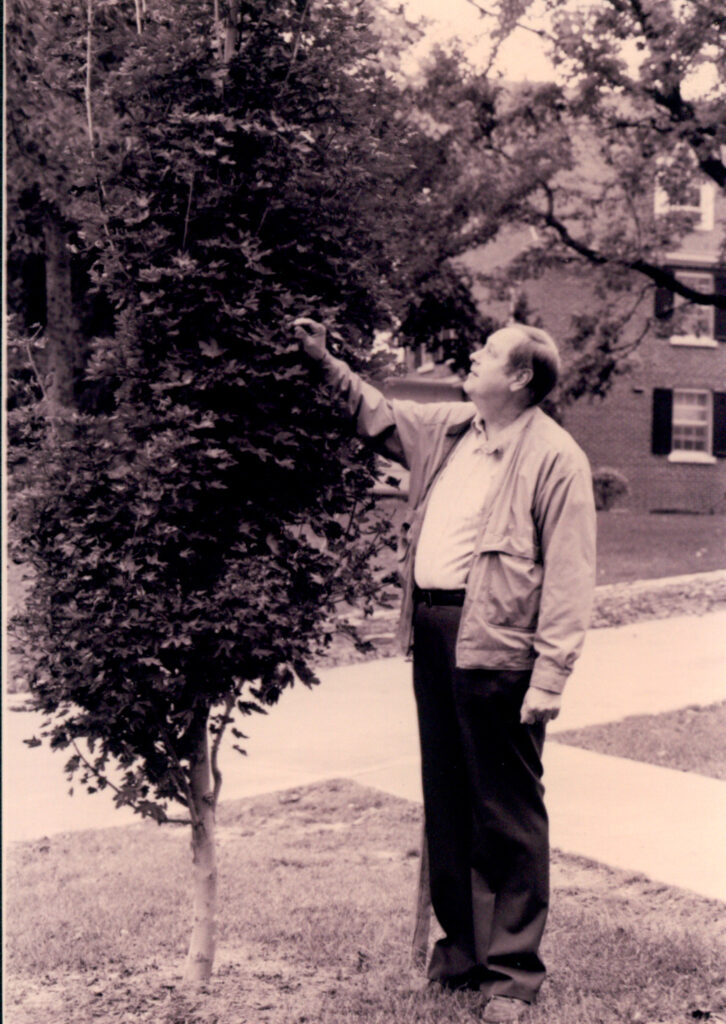
He chained himself to trees in Oregon as a graduate student. He joined conservation boards and community action groups in every city he lived in — Alma, Richmond, Traverse City — focused on agricultural policy, water quality, urban planning, and land use. He headed Alma’s Environmental Studies Program. He identified and catalogued trees throughout the Alma campus to support the college’s arboretum, and with grant funds, planted maple trees all along Maple Avenue at the edge of campus. He argued with the federal employees about the safety of the polluted Superfund Site in St. Louis, Michigan. He showed up to meetings, sat on committees, wrote letters, and participated in the slow, unglamorous work of protecting the places and systems he loved.

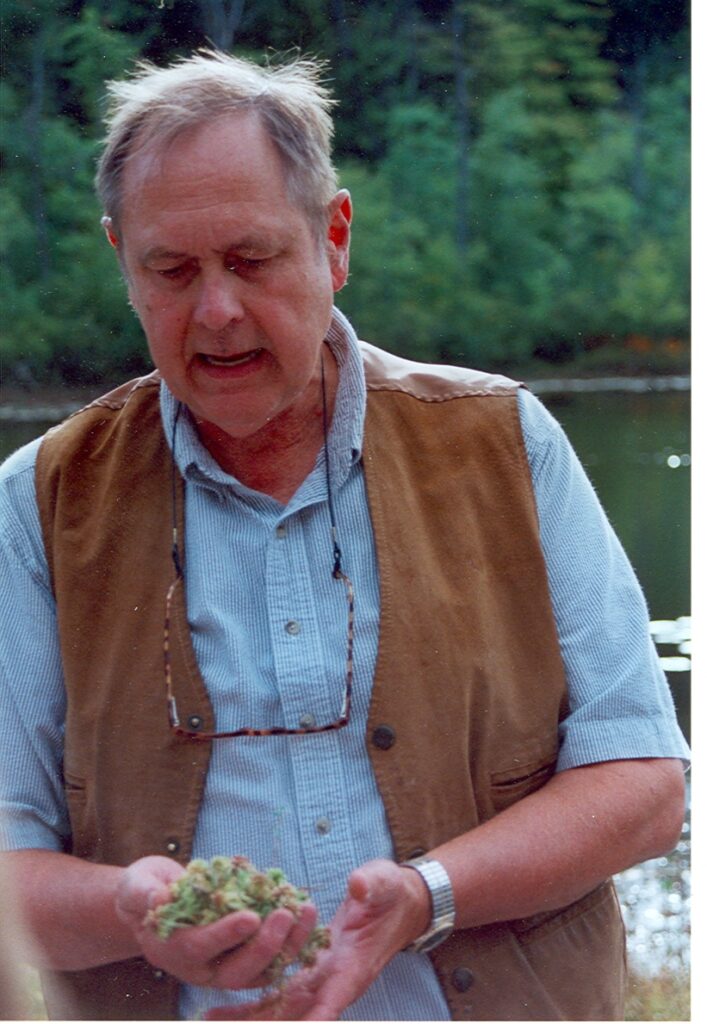
He continued his scientific research alongside all of this. His work on ambrosia beetles and their associated fungi brought him into correspondence with researchers at Iowa State, Cornell, and universities in Germany. In 2014, a newly identified fungal species was named in his honor: Ambrosiella roeperi. He published his last research in his 80s.
He Showed Up
Here is the thing about Dick Roeper, the thing that holds all of it together:
He showed up.
He showed up for conservation when it cost him something. He showed up for his students — at class, at their poster presentations, at their dormitory doors when they’d gone missing. He showed up for Alma College basketball games, serving as statistician for years, giving up uncountable weeknights because the team needed someone to keep track and he was willing to be that person.
As a father and grandfather, he showed up for years of swim meets and dance competitions and vocal performances and dance recitals and plays and youth baseball games that had nothing to do with biology, basketball, or the Cubs.
He was not a man of many words about love. But he was a man who planted himself, consistently, wherever presence mattered. His former students know this. His family knows this. And the people who have his hostas growing in their gardens — many of whom only met him once — keep a bit of him planted now.

Dick passed away in Traverse City, Michigan, on December 28, 2025. He is survived by his wife Karen; his children Carleen, Christopher, Eben, and Lauren; and grandchildren Lucas, Jesse, and Finn.
Memorial contributions are welcomed to the Richard Roeper Endowed Lecture Series at Alma College, which brings research scientists to campus to share their work with undergraduates — exactly the kind of thing Dick believed in.